
LaGuardia, JFK, Potomac. These Aren’t Isolated Events. They’re Signals.
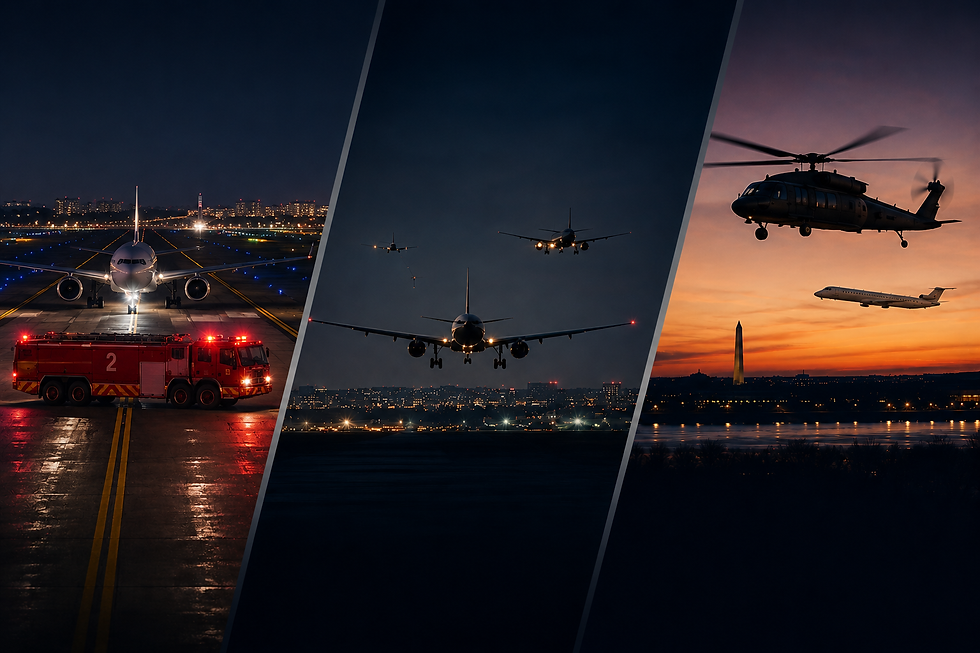
In the recent past, aviation has produced a series of events that, on the surface, appear unrelated. At LaGuardia, a fire truck and an aircraft ended up colliding on the runway. At JFK, two passenger aircraft came within 350 feet of each other before TCAS alerts forced evasive action. Over the Potomac, a regional jet and a military helicopter collided with fatal consequences. We've published blogs on all 3 of these accidents/incidents.
It would be easy to treat each of these as standalone events with their own unique causes and circumstances. That’s usually what organisations do.
The problem is that when you zoom out slightly, a pattern starts to appear. And the pattern is much more important than the individual events themselves. That's what this blog will discuss.
1. The Margin Is Quietly Reducing
As you'll be aware if you've read our last few blogs, none of these events began with a dramatic failure. Everything looked relatively normal right up until the point it didn’t.
At LaGuardia, vehicles were moving, aircraft were landing, and the system was flowing traffic exactly as it does every day. At JFK, aircraft were operating normally within a busy and highly compressed environment. Over the Potomac, crews and controllers were all doing jobs they had done many times before.
That sort of 'normal' is what can make these events uncomfortable. Systems rarely fail all at once. More often, the margin gradually reduces while the appearance of normality remains intact. This is easy to miss because nothing initially feels unsafe. In fact, the opposite often happens. Systems that continue to operate under increasing pressure can start to feel efficient, capable and resilient.
Until suddenly they don’t.
We see this in organisations all the time. Teams absorb more workload while processes become slightly more compressed. Workarounds start to become normal and people adapt and continue delivering outcomes, which reinforces the belief that the system is coping.
Adaptation is not the same as resilience.
Sometimes it’s simply the system operating closer and closer to the edge without fully recognising it.
2. The System Starts Relying on Recovery
One of the clearest themes across all three events is how heavily the outcome depended on recovery rather than control. At JFK, the final barrier was TCAS. At LaGuardia, the controller recognised the conflict, tragically, too late to effectively intervene. Over the Potomac, there were multiple opportunities where the developing situation might have been recognised earlier and interrupted before the margin disappeared completely.
Once systems begin relying on last-minute intervention, they are no longer really managing risk upstream. They are depending on people, technology or luck to recover the situation before the consequences arrive.
That can feel deceptively successful when a near miss gets resolved or a project gets recovered. A mistake gets caught just before release and everyone breathes out and moves on.
The conclusion is often something like, “That was close, but we managed it.” Maybe. Systems that routinely need last-second recovery are telling you something important. They are telling you the margin is no longer where you think it is.
3. Known Risks Stop Feeling Urgent
Another frustrating theme is that very little of this was truly unknown. Concerns had already existed around airspace complexity, workload, close proximity events and increasing operational pressure. None of these appeared out of nowhere.
Organisations often struggle with this sort of things most. Risk that exists for a long time without consequence slowly stops feeling like risk and become familiar and familiar things rarely create urgency.
This is how systems drift. Not through recklessness or incompetence, but through gradual adaptation. The unusual becomes routine. The routine then becomes accepted. Over time, people stop seeing the exposure because they have become accustomed to operating around it.
That’s a very normal human response. It’s also potentially dangerous. By the time the consequences finally appear, the conditions that created them have often existed for years.
4. It All Makes Sense at the Time
There’s a tendency after events like this to ask:
“How did nobody see this coming?”
Usually, people did. Perhaps just not completely. Which is an important distinction. From the outside, with hindsight, the sequence looks obvious. Any geometry is clear and the conflicts stand out immediately. The outcome feels predictable (this is hindsight bias in action).
From the inside, in real time, it feels very different. People manage incomplete information while the situation continues to evolve around them. Workload competes for attention. Priorities shift and assumptions fill gaps in understanding. Each individual step continues to make sense locally, even while the overall system is gradually moving toward trouble.
That’s why these events are so difficult to prevent. This is not because people don’t care. Nor because they aren’t competent. It's because complex systems rarely announce clearly that the margin has disappeared.
Final thought
The real lesson from LaGuardia, JFK and the Potomac collision is not that aviation is becoming unsafe. It’s that systems under pressure often drift gradually toward a position where failure becomes more likely while still appearing to function normally.
The signal in all this is the growing reliance on recovery. Shrinking margins. Acceptance of complexity. The normalisation of “close.” The quiet belief that because the system worked yesterday, it will probably work tomorrow.
Most of the time, it will. Until eventually it doesn’t.
If you’re a leader…
The useful questions are probably not about aviation. They’re about your organisation.
Where is your margin quietly reducing?
What problems are being recovered rather than prevented?
What risks are already known, but no longer feel urgent?
Where has “normal” drifted further than you realise?
Remember, systems rarely fail without warning. Usually, the signals were there long beforehand.
-----------------------------------------------------------------------------------------------------------------------------------------------------

Mike Mason and Sam Gladman are the co-founders of On Target, a leadership and team development company that brings elite fighter pilot expertise into the corporate world. With decades of combined experience in high-performance aviation, they specialise in translating critical skills such as communication, decision-making, and teamwork into practical tools for business. Through immersive training and cutting-edge simulation, Mike and Sam help teams build trust, improve performance, and thrive under pressure—just like the best flight crews in the world.
If you'd like to learn more about how On Target can help your team, contact Mike and Sam at info@ontargetteaming.com.


Comments