
When “They Broke the Rules” Stops Us Learning Anything. The Worst Ever Diving Accident in The Maldives.
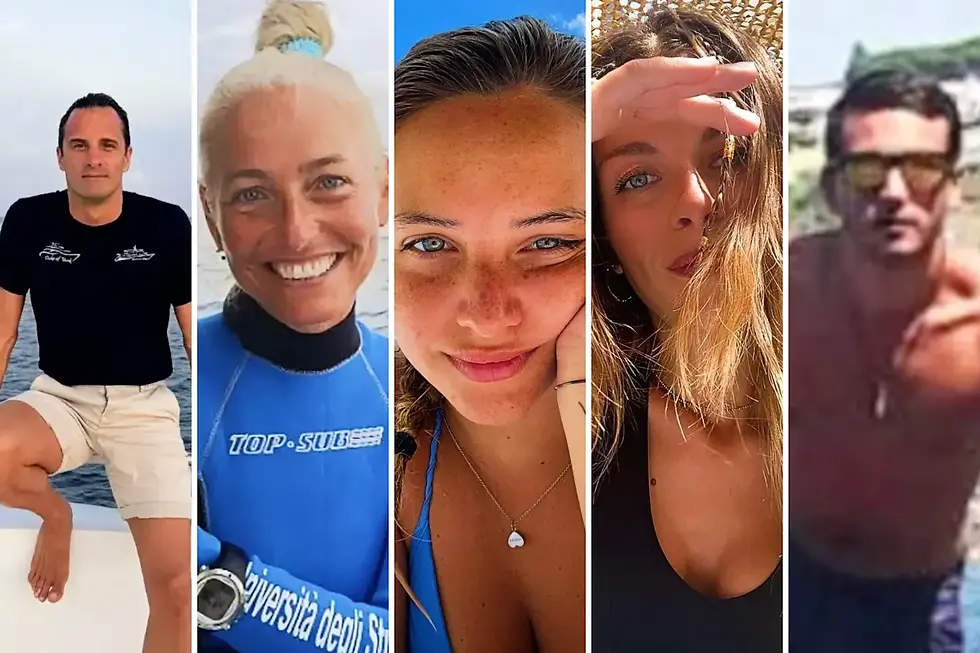
Five divers entered a cave system in the Maldives on the 14th May 2026 and never came back. A sixth person — a Maldivian rescue diver — died in the days after during the recovery operation.
Almost immediately, the conversation online became frustratingly predictable.
“They shouldn’t have been in there.”
“They broke the rules.”
“They were unqualified.”
Maybe. However.....
Those sorts of conclusions are also where learning pretty much stops. Once we decide the outcome was simply the result of “bad decisions,” we believe there is no longer any need to ask uncomfortable questions about the wider system surrounding those decisions.
That reaction is quite understandable. Blame is fast and it gives certainty. More importantly, it creates distance. If the people involved were reckless, the rest of us can reassure ourselves we would never do the same thing. Us vs them. Problem solved.
Actually, accidents in high-risk environments are rarely that simple.
As part of my work with The Human Diver team, this is one of the reasons we spend so much time discussing how organisations respond after incidents. The same thinking sits at the heart of what we do through On Target. Understanding why actions made sense at the time is far more useful than simply identifying which rule was broken.
1. “They Broke the Rules” Often Ends the Conversation
One of the most interesting aspects of the Human Diver article on this accident is not the conclusions. It is the restraint. Repeatedly, the article returns to the same point:
“We don’t yet know.”
Most of the important questions in accidents like this are not immediately visible from the outside. We rarely know:
what conversations happened beforehand
what assumptions existed
what previous experience shaped the decision
what “normal” looked like for that group
whether concerns were raised
how risk was actually perceived at the time
Instead, we usually start with the outcome and work backwards. Five people died in a cave at 55 metres. Entering the cave therefore appears obviously reckless. Hindsight has a habit of removing uncertainty. From the outside, after the fact, the risk feels crystal clear. From the inside, before the event, the picture can feel very different.
I want to emphasise that none of this removes accountability. What I want to do with this article is discuss how human decision-making actually works.
2. Systems Quietly Shape What Feels “Reasonable”
One of the strongest themes running through the Human Diver article is the idea that systems gradually shape what people see as normal. The Maldives officially limits recreational diving to 30 metres. The cave entrance reportedly began around 55–58 metres.
On paper, the gap looks enormous. Operationally, perhaps less so. The article discusses how deeper dives are commonly talked about within the industry, how recreational infrastructure quietly stretches beyond recreational boundaries, and how certain behaviours slowly become accepted practice despite technically sitting outside formal rules.
That becomes uncomfortable very quickly. The discussion moves away from:
“Why did these individuals break the rules?”
…and toward:
“How did the environment shape what felt acceptable?”
We see the same thing in organisations constantly. Processes drift. Workarounds become normal. Teams adapt to pressure. Rules remain written down while operational reality gradually moves elsewhere. Importantly, very little (if any) of this feels reckless to the people involved. Most of the time it simply feels practical. Experienced. Efficient. Necessary.
Eventually the gap between “work as imagined” and “work as done” becomes impossible to ignore.
3. A Better Question Is “What Made Sense At The Time?”
This is probably the most important shift in thinking. Instead of asking:
“Why did they do something so dangerous?”
…it is often far more useful to ask:
“What made this seem reasonable at the time?”
Very different questions. The first pushes us rapidly toward judgement. The second pushes us toward understanding. Again, accountability still matters but accountability without understanding rarely improves systems.
The article raises several possibilities:
previous experience in similar environments
blurred boundaries between cavern and cave diving
scientific research pressures
authority gradients within the group
assumptions created by familiarity
operational norms which may already have drifted
At this stage, many if not all of these remain hypotheses rather than facts. This uncertainty is precisely the point of what the article is trying to expose. Good investigations resist the urge to rush toward certainty before understanding the context surrounding the decision.
Several competent and experienced people all arrived at the same course of action. The useful question therefore is usually not:
“Which individual failed?”
A much more useful question is:
“What conditions made this course of action appear acceptable?”
4. This Is Not Really A Diving Story
Or at least, not only a diving story. The same dynamics appear in organisations every day.
A project pushes beyond safe timelines because “we’ve managed before.” A team operates outside process because “this is how we get things done.” A risk becomes normal because nothing bad has happened yet. A workaround quietly becomes the system.
Then something finally goes wrong and the instinctive reaction arrives immediately:
“Why didn’t people follow the rules?”
In general, that is the wrong question. Rules do matter but rules alone rarely explain behaviour. People generally do what makes sense within the environment they are operating in. That environment includes pressure, incentives, authority, familiarity, workload, culture and previous success.
Ignoring those factors often leads organisations toward treating symptoms while leaving the underlying conditions untouched.
Final thought
The Human Diver article repeatedly avoids delivering a verdict. The moment we become convinced we already know exactly why people acted the way they did, curiosity usually disappears. Once curiosity disappears, learning disappears with it.
Five divers died in the Maldives. A rescue diver died days later trying to recover them. Rule violations may well have existed. Far more may also have been happening beneath the surface.
The investigation will hopefully establish much more over time. In the mean time, before rushing toward conclusions, there is probably value in asking better questions first.
Not:
“Who failed?”
More usefully:
“What conditions made this make sense?”
-----------------------------------------------------------------------------------------------------------------------------------------------------

Mike Mason and Sam Gladman are the co-founders of On Target, a leadership and team development company that brings elite fighter pilot expertise into the corporate world. With decades of combined experience in high-performance aviation, they specialise in translating critical skills such as communication, decision-making, and teamwork into practical tools for business. Through immersive training and cutting-edge simulation, Mike and Sam help teams build trust, improve performance, and thrive under pressure—just like the best flight crews in the world.
If you'd like to learn more about how On Target can help your team, contact Mike and Sam at info@ontargetteaming.com.


Comments