
When Words Kill: Aviation Communication Lessons For Business From The Tenerife Air Disaster
- mikemason100
- Oct 20, 2025
- 5 min read


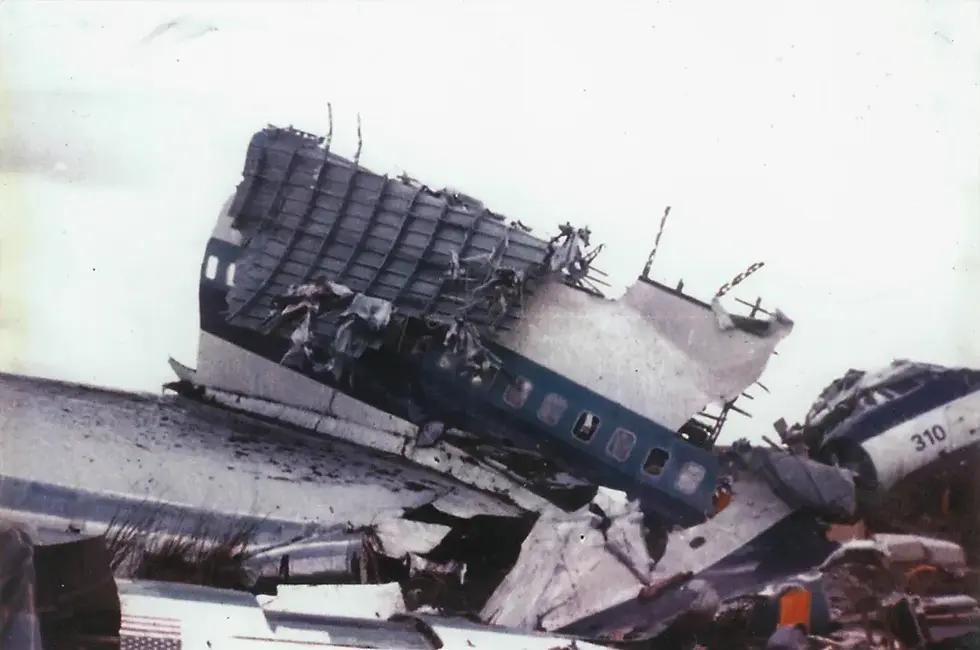
On March 27, 1977, two Boeing 747 Jumbo Jets, one operated by KLM, the other by Pan Am, collided on a fog-covered runway at Los Rodeos Airport in Tenerife. Five hundred and eighty-three people were killed. This is still the deadliest accident in aviation history and it was essentially caused by humans trying to do their jobs in difficult conditions. By communicating, making decisions and managing pressure in a system that allowed misunderstanding to grow unchecked until it became fatal.
The tragedy reshaped aviation forever. It helped drive the creation of Crew Resource Management (CRM), redefined how flight crews communicate, and made clarity, assertiveness, and collaboration non-negotiable in safety-critical industries.
So why am I here, more than 40 years later, talking to you about it? Simply because its lessons apply just as powerfully in business. What killed 583 people that day weren’t technical failures, they were organisational ones: hierarchy, ambiguity, communication. All related to culture. Here are three lessons aviation learned from Tenerife, and how they translate into the way we lead and work today in business.
Lesson 1: Ambiguity Is the Enemy of Safety
In the fog at Los Rodeos, visibility was near zero. The Pan Am aircraft was taxiing on the runway, while the KLM aircraft waited for clearance to take off (lined up at the end, unknowingly pointing right at the Pan Am aircraft).
The KLM captain, an extremely experienced and respected instructor, believed he had been cleared for takeoff. The tower’s phraseology included the words “you are cleared to the takeoff runway” but not “cleared for takeoff.” The distinction was subtle but critical. The captain advanced the throttles.
Seconds later, the KLM aircraft struck the Pan Am 747 on the runway, killing nearly everyone aboard both planes. That single phrase, “cleared for takeoff”, has since been enshrined as a phrase that can only mean one thing: explicit permission to begin the takeoff roll. Controllers never use it until they truly mean it. Pilots never move until they hear it. This clarity saves lives.
Business translation: Ambiguity can kill projects. Sometimes quickly but more often slowly, invisibly, and often with everyone assuming they understand. How many times has a leader said, “Go ahead,” meaning “prepare,” while a team heard “execute”? How many times have vague emails or half-agreed next steps led to rework, conflict, or failure?
Clarity isn’t about being pedantic, it’s about ensuring an accurate shared mental model which in turn, promotes better decision making.
Ask yourself: Do your teams have a shared language for decisions and permissions? Do you use phrases that leave no doubt about what happens next? If not, you’re possibly only one misinterpretation away from your own version of Tenerife.
Lesson 2: Hierarchy Can Silence the Truth
In the cockpit of the KLM 747 sat one of the airline’s most senior captains, an instructor who was admired by peers and feared by subordinates. The first officer questioned whether they truly had clearance to go, but his tone was tentative. He said, “We’re still waiting for our clearance.” The captain replied confidently, “We have clearance.” The conversation ended there and a few seconds later, both were dead.
That exchange changed aviation forever. It exposed how authority gradients, the unspoken hierarchies between captains and crew, can suppress vital information. In response, aviation developed Crew Resource Management: structured, practiced communication where anyone can question anything if safety is at stake. In healthy cockpits today, a first officer can challenge a captain, a cabin crew member can interrupt a pilot, and a mechanic can stop a flight because it’s understood that good leadership invites challenge, it doesn’t punish it. None of us are as smart as all of us.
Business translation: Hierarchy isn’t the problem, silence is. When team members feel they can’t speak up because a leader “won’t want to hear it,” risk multiplies. That’s how bad strategies, unsafe practices, or toxic behaviours persist unchecked.
Leaders must actively flatten communication barriers. Ask for challenge. Reward dissent. When people disagree with you, thank them, because that disagreement might be the one thing keeping you safe. If your organisation relies on courage to overcome hierarchy, it’s already unsafe.
Lesson 3: Pressure Makes Smart People Stupid
The KLM captain was under pressure. His crew had been delayed for hours after a bomb threat diverted flights to Tenerife. The crew’s duty hours were running out. The weather was worsening. He wanted to get airborne before the airport closed.
Under pressure, our focus narrows. We fixate on one goal and tune out contradictory information. Psychologists might call it goal fixation or task saturation and it affects everyone, not just pilots. The captain heard what he wanted to hear: clearance to take off.
Aviation now trains crews explicitly to manage this kind of pressure: time stress, fatigue, and external distractions. Checklists, callouts, and structured decision tools exist precisely to slow thinking down when instinct says to speed up.
Business translation: Time pressure makes every organisation vulnerable to Tenerife moments. Deadlines, client demands, media scrutiny, all of it narrows focus and breeds tunnel vision. That’s when leaders skip reviews, teams bypass checks, and groupthink takes over. The faster the clock ticks, the quieter dissent becomes.
High-reliability organisations create systems that force reflection under pressure. Pre-mortems, decision gates, and red-team reviews slow momentum just enough to prevent irreversible mistakes.
As the saying goes: “In an emergency, you don’t rise to the occasion, you fall to the level of your training.” The same is true in business. When stress hits, people don’t become smarter. They become faster versions of their habits.
Bringing It Together: What Aviation Taught the World
The Tenerife disaster changed aviation culture more than any other single event. From it, the industry learned that:
Clarity must be absolute.
Hierarchy must never silence challenge.
Pressure must be managed, not ignored.
These principles are now so deeply ingrained in aviation that they’re almost invisible, built into phraseology, crew structures, and training. That’s why commercial aviation is now the safest form of transport in the world.
But in many organisations, the same risks remain unchecked. Communication is fuzzy. Hierarchies go unchallenged. Pressure drives people to cut corners.
The business world doesn’t need a Tenerife moment to learn these lessons. It just needs the humility to recognise that even smart, well-meaning professionals make deadly assumptions under stress.
Final Thoughts
The Tenerife disaster wasn’t about one pilot, one mistake, or one bad decision. It was about how humans behave inside systems that allow ambiguity, silence, and pressure to coexist.
Aviation turned that tragedy into transformation. Every industry should do the same. Clarity saves lives. Challenge saves teams. Reflection saves organisations. And when it matters most, those aren’t just safety principles, they’re leadership essentials.
-----------------------------------------------------------------------------------------------------------------------------------------------------

Mike Mason and Sam Gladman are the co-founders of On Target, a leadership and team development company that brings elite fighter pilot expertise into the corporate world. With decades of combined experience in high-performance aviation, they specialise in translating critical skills such as communication, decision-making, and teamwork into practical tools for business. Through immersive training and cutting-edge simulation, Mike and Sam help teams build trust, improve performance, and thrive under pressure—just like the best flight crews in the world.
If you'd like to learn more about how On Target can help your team, contact Mike and Sam at info@ontargetteaming.com



Comments